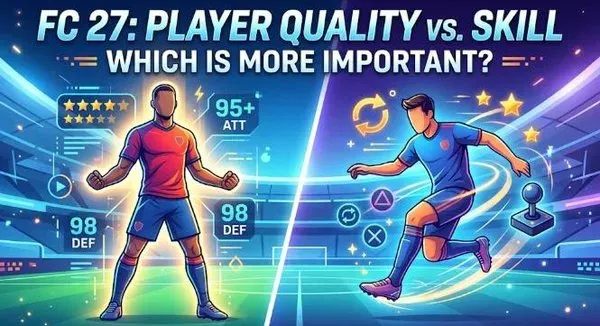
In FC 27 Ultimate Team's Division Rivals, if you want to hold your current Division, reducing consecutive losses and raising your performance floor is far more important than chasing a win every match. Mentality management and in-match decision-making are key, followed by tactical stability.
Keeping a stable defensive mindset is crucial
In many Division Rivals matches, your defensive mindset basically determines whether you can bring your defensive ability to bear.
If you have the following bad habits, it's worth breaking them:
- Don't casually control a center-back to step up and press. Prioritize dropping a CDM or CM back to intercept and let the center-backs hold the line.
- Don't constantly use R1 teammate press. Use it when the opponent enters a dangerous area and you need to cut off passing lanes.
- Don't switch defenders too frequently. First read the opponent's attacking direction, then choose the most suitable player to intercept.
- Don't blindly sprint back on defense. Keep a reasonable distance between your defender and the attacker to avoid getting easily beaten by a direction change.
All four of these easily break your defensive shape, and maintaining shape is very important. It's better to let the opponent keep the ball on the periphery than to actively break your own defensive shape trying to win the ball.
Don't over-chase efficiency in attack
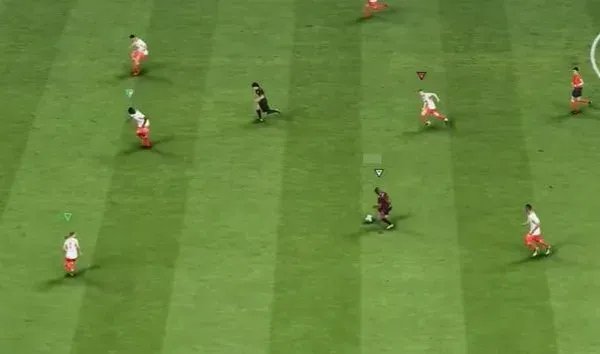
Forcing through balls and over-relying on sprinting easily lead to turnovers, ultimately giving the ball to the opponent's feet instead of putting it in the net.
Attackers should be more decisive, but never reckless. Don't pass up any shooting chance, but if there isn't one, look for one first—switch play out wide, pass back to reorganize the attack, and make sensible use of your players' dribbling and passing. Trying to shoot after the opponent makes a defensive mistake will be more stable.
When leading, play as conservatively as possible—holding the score is easier than extending the lead. When trailing, don't rush to chase the game and become overly aggressive, or you may well end up on the wrong end of a bigger scoreline.
What should you pay attention to at each FC 27 Division stage?
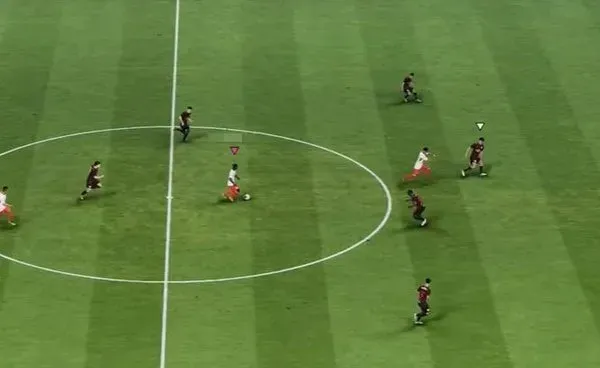
FC 27 Rivals has 11 levels in total, Division 10–1, plus the top level, Elite Division. Opponent characteristics and match intensity vary greatly across Divisions. Based on skill level, tactical understanding, attacking and defending decisions, and match consistency, they can be roughly divided into 6 stages by competitive level.
Stage 1: Division 10–8, learn to play matches normally
This stage is basically the beginner stage. Many players haven't yet formed a complete match plan. Compared with true beginners, most are probably just more proficient with the controls.
The most important thing at this stage isn't learning complicated skill moves, but building correct match habits. The passing standard is no longer frequently making low-level mistakes, being able to consistently build attacks, and knowing why you conceded.
Stage 2: Division 7–6, build stable attacking patterns
From this stage on, you need to develop your own fixed attacking patterns—being able to control the tempo against ordinary opponents and not frequently losing the ball against opponents who actively press.
This stage requires a lot of practice to become thoroughly familiar with the basic controls for all types of players.
Stage 3: Division 5–4, build a complete attacking and defending system
This is a very important watershed in the entire Rivals promotion process. By this stage, relying on basic controls alone is completely insufficient. Opponents can use teammate press to limit your ball progression and adjust their defensive strategy based on your attacking habits.
At this stage, you need to focus more on managing your defensive space, especially watching the connecting lines between the opponent's forwards and midfielders.
In attack, reduce ineffective central passing and make more use of wide spaces to try to break through. When you can't break through in the current situation, learn to drop back in time and look for chances elsewhere instead of forcing a breakthrough and giving possession away.
The most important thing is adjusting match tempo based on the score—lower unnecessary attacking risk when leading, and appropriately raise pressing intensity when trailing. Find an attacking system you're familiar with, then keep improving the quality of execution.
When you can maintain a relatively complete attacking and defending system against different styles of opponents and don't completely lose your match rhythm just because the opponent changes their approach, you can move on to the next stage.
Stage 4: Division 3–2, learn to read the match and make in-game adjustments
By this stage, ordinary tactics and attacking patterns can hardly give you an obvious advantage. Every opponent you face is very familiar with the game mechanics and can easily read your attacking intent.
For example, your through-ball routes are easily predicted in advance, or the opponent always timely uses a second defender to press.
Once your defense makes a mistake, the opponent will immediately seize the chance to attack—even in tight spaces, they can pull off all kinds of flashy plays.
Almost every detail of your actions can decide the outcome of the match. You need to learn to identify the opponent's attacking habits during the match and adjust your attacking and defending strategy accordingly, making more targeted temporary changes.
Stage 5: Division 1, refine match details
Division 1 is already a fairly high competitive level. The basic control gap between players is already small enough to be negligible, and match details have a greater impact on results.
The impact of in-match decisions is equally important. Whoever can more accurately read the opponent's defensive intent has the absolute advantage. You need to prepare different attacking and defending plans for different opponents.
In addition, keeping your mentality steady is also very important. You need to learn to maintain your match system and not lose your match judgment just because the opponent scores consecutive goals.
Stage 6: Elite Division, maintain a high Skill Rating
Elite is the highest level of Rivals. The matchmaking mechanism at this stage is slightly different—it no longer relies purely on normal Division Rank, but also matches based on Skill Rating. So you can't just focus on wins and losses; you also need to watch your Skill Rating changes.
In matches, don't let your attacking patterns become overly fixed. Learn to actively adjust tactics based on the opponent's play style.
At this stage, defense is more important than attack. Losing points becomes very easy, but scoring is harder, so minimize unforced errors as much as possible.