If you've ever rolled a careless back pass straight into a striker's run, you already know the frustration. It looks like the safe move. Then the ball leaves your defender's foot, the striker steps in front of your keeper, and suddenly your opponent has a clear chance inside your own penalty area. That's a rough way to lose a match you were controlling.
Here's the thing I had to learn the hard way: your FC 27 goalkeeper isn't a panic button. They're an extra passing option — one that only works when you read the pressure first. This guide covers when to use your keeper in FC 27 build-up play, when a back pass quietly turns into a trap, and how to pick between short and long distribution once the ball is in their hands.
When a Back Pass to Your Keeper Makes Sense
A back pass should open a better passing angle. If it just moves the pressure closer to your own goal, it's not helping.
Send it back when both center backs are marked tight and your CDM's lane is shut down. Their forwards are pinning your defenders, and you need a fresh route to restart possession without forcing a ball through traffic.
Same logic applies when the press shoves your full-back toward the touchline. If he has nothing safe going forward, a return ball to the keeper gives you a breath and a chance to reorganize.
Before you make that pass, run a quick three-step check:
- Pressure — is the nearest striker far enough away for your keeper to take a touch?
- Angles — does your keeper actually have one clear short option?
- Next receiver — can that teammate control it without getting jumped immediately?
All three clean? The back pass is a real tool, not a cop-out.
When a Back Pass Becomes a Trap
This is the part that costs people games.
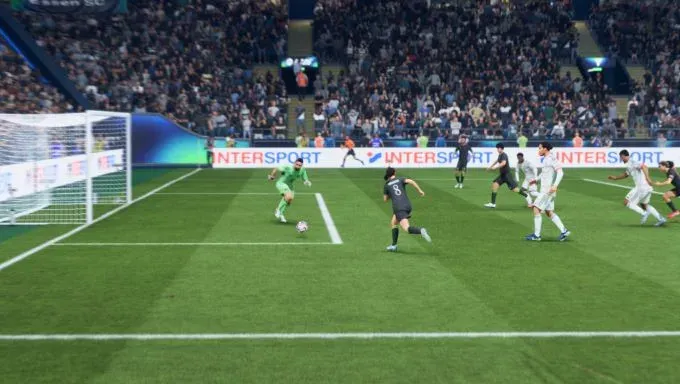
Skip the back pass when a forward is sitting directly between your defender and the keeper. That return ball rolls right into their run, and if you telegraph it, they're already moving before it leaves your foot.
Also skip it when your keeper has no time to control and pick a direction. A rushed first touch from your keeper leaves you with fewer options than you started with.
And don't do it just because you're nervous. If a safe wide or forward option is already there, take it. Constant resetting lets the opponent reload their block and wait for you to slip.
Simple rule: use your keeper when the pass improves your options, not because the pressure made you flinch.
What to Check Before Your Keeper Even Touches It
Once you've committed to the back pass, prepare your keeper's first touch before the ball arrives. If there's enough time and space, direct the ball toward the side of your next passing option rather than into the approaching striker's path. This helps preserve your passing angle and reduces the risk of an easy interception.
Short Distribution or Long Switch?
Ball's with your keeper. Now you've got two directions of thinking: keep it close, or move it far.
Go short when:
- a center back has dropped into a clean lane
- a full-back is free and away from the immediate pressure
- their press is aggressive but leaving a nearby outlet open
Make sure the receiver has room to control and swing the next pass. Don't force a short ball just because it feels tidy — a short distribution into a tight marker is worse than a long one.
Go long when:
- both nearby center backs are covered
- the opponent has shifted most of their block to one side
- a teammate on the opposite side is standing with real space
Aim at a teammate, not at empty grass. If they've already recovered their shape, that long ball is just a gift.
Timing is the whole game here. The switch works while the far side is still open — not after the defense has already slid across.
How Keeper Roles Shape Your Build-Up
Your keeper's role affects how they support possession, so it's worth understanding the differences before choosing one.
A Goalkeeper follows a traditional approach. Defend Focus keeps them in position and reduces their tendency to rush out, while Balanced Focus allows them to occasionally collect loose or long balls outside the box.
A Ball-Playing Keeper is designed to provide an additional passing option during build-up. With Build-Up Focus, they move higher up the pitch to offer more support in possession.
A Sweeper Keeper is more willing to move off their line and deal with balls outside the box. With Build-Up Focus, they push even higher to help support possession.
Each role offers different positioning and behavior. However, choosing a Ball-Playing Keeper doesn't make every back pass safe. You still need to judge the striker's distance, available passing lanes, and whether your next receiver is actually free.
Three Match Scenarios to Practice
1. Both center backs marked, keeper standing free.Play it back, then look wide. Take the touch, scan the far side, and hit the free full-back instead of rushing the first short option you see.
2. A striker parks himself in the return lane.Don't force it. Go to a free full-back or recycle through the other defender and change the angle. Forcing this pass can turn a simple build-up situation into an immediate scoring chance for your opponent.
3. They overload one side and leave the far winger alone.That's your long switch window. Hit it while the space is still there, because it closes fast once they slide.
None of these are fixed rules. The opponent's movement decides your next touch.
Final Thoughts
Your goalkeeper can be one of the most useful outlets in FC 27 build-up, but the back pass itself isn't the answer. The answer is what you do after it.
Check the pressure, know your second pass, and pick between a short distribution and a long switch based on where the space actually is. A good back pass buys you control. A careless one hands your opponent a free look at goal. The difference isn't how often you use your keeper — it's how well you read the situation before the ball goes backward.