If you have used the balanced wingback version of a 5-2-1-2, you know the tradeoff: it offers a more conservative defensive shape but less aggressive support in wide areas. This alternative puts both wingbacks on the Attack focus and relies on a dedicated Holding midfielder to protect the three-man back line.
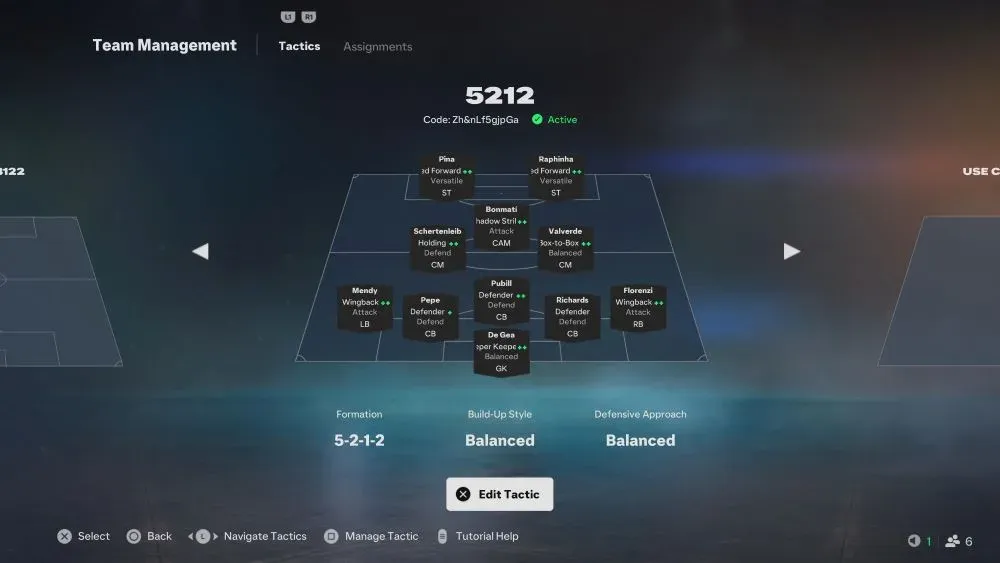
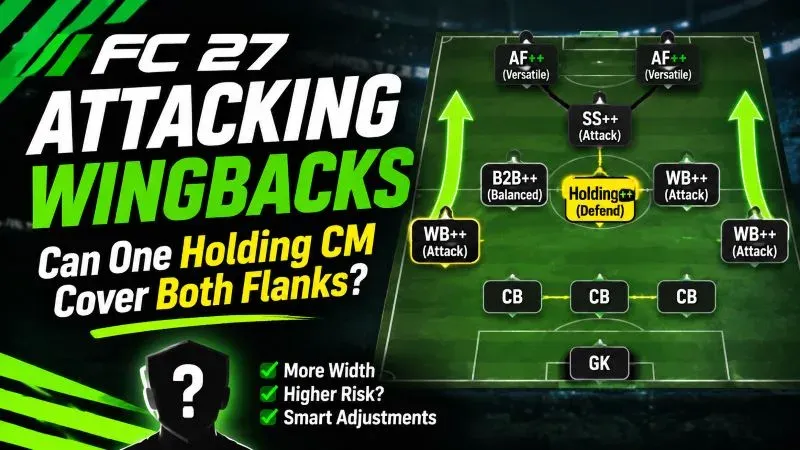
We tested this setup across 12 Rivals matches using tactic code Zh&nLf5gjpGa, focusing on attacking width, defensive transitions, and how much ground the midfield had to cover. The lineup pairs Mendy and Florenzi as Wingback++ (Attack), Schertenleib as Holding++ (Defend), and Valverde as Box-to-Box++ (Balanced). Ahead of them, Bonmatí plays Shadow Striker++ (Attack), while Pina and Raphinha lead the line as Advanced Forward++ (Versatile). We used the balanced version as a reference point when evaluating the tradeoffs of the more aggressive setup.
The Setup: What Changes From the Balanced Version?
Both builds share a 5-2-1-2 foundation with Balanced Build-Up Style and Balanced Defensive Approach. The main difference is how attacking and defensive responsibilities are distributed across the squad.
This aggressive variant makes two key adjustments:
- Wingback positioning: Both wingbacks use the Attack focus instead of the more conservative Balanced focus.
- Midfield structure: A dedicated Holding midfielder replaces the second Box-to-Box role.
The tradeoff is clear: more consistent attacking width, but fewer midfielders available to cover space during defensive transitions.
Attack vs Balanced: What Do Mendy and Florenzi Actually Add?
The biggest benefit of putting both wingbacks on Attack is more consistent width in possession.Mendy pushes high on the left, and Florenzi mirrors that movement on the right. Against narrow defensive blocks, these runs drag opposition fullbacks wide, opening central half-space lanes for Bonmatí, Pina, and Raphinha to attack.In our Rivals matches, this setup offered more opportunities to switch play toward an advanced wingback, opening up cutback and crossing options when central routes were crowded.
The balanced wingback build delivers a different safety-first benefit. Its wingbacks make more restrained forward runs, reducing the space they leave behind when possession is lost.The Attack focus does not stop Mendy and Florenzi from tracking back. However, their more aggressive positioning makes recovery harder when both are caught upfield at the same time.Pick Attack for sustained wide pressure; switch to Balanced when defensive shape matters more than constant overlaps.If you prefer a more conservative approach, compare this setup with our balanced wingback 5-2-1-2 tactic guide.
Can Schertenleib Protect Both Flanks?
This is where the setup demands sharp manual defending.Schertenleib’s Holding++ (Defend) role anchors the center in front of Pepe, Pubill, and Richards. He helps screen the space between midfield and defense, giving your three center backs additional protection against central passing combinations and through-ball attempts.
Central screening, however, is not the same as covering both wide channels.When Mendy and Florenzi are committed high, Schertenleib cannot single-handedly fix every exposed flank. Your defensive shape relies on the rest of the unit to back him up.That is Valverde’s critical job.If you lose the ball on Mendy’s side, manually select Valverde and recover toward the exposed left channel. If Florenzi is stranded forward, use him to cover the right instead—but avoid abandoning the central space in front of your center backs.
Meanwhile, Pepe, Pubill, and Richards need to shift across as the opponent moves the ball wide, while the remaining defenders protect central runs. This requires careful positioning rather than relying on one center back to cover every exposed channel.
Compared with the balanced variant, this build shifts much more workload onto quick player switching and active positioning. Schertenleib screens the center; Valverde cleans up the wide spaces the Holding role cannot reach.
How Bonmatí, Pina and Raphinha Turn Width Into Chances
The attack works by pairing wide runners with a three-pronged central threat.Bonmatí’s Shadow Striker++ (Attack) role gives you another runner into the penalty area. Instead of asking her to stay deep and recycle passes, use Bonmatí’s forward movement to support Pina and Raphinha near the box.Pina and Raphinha act as vertical outlets. They can run behind the defensive line, combine one-touch with Bonmatí, or drag opposing center backs out of position.When the middle gets congested, avoid forcing passes through traffic and switch out to Mendy or Florenzi.This creates a difficult choice for the opponent: protect the central attacking trio or step out to track the advancing wingbacks. This attacking framework exists in the balanced version too, but dual Attack wingbacks make wide switches a core, repeatable tactic.
When to Use It and When to Switch Mid-Match
This build shines against narrow, compact defenses. It stretches the block without leaning only on central combinations.It struggles most against fast counter-focused teams that target the channels behind your wingbacks.Use these live in-game adjustments:
- Against compact blocks: Keep both wingbacks on Attack and use quick side-to-side switches.
- Defending transitions: Switch to Valverde early and recover toward the exposed flank instead of chasing the ball with a center back.
- Crowded central zones: Use Bonmatí’s forward movement, then switch wide if the lane closes.
- Protecting a late lead: Change both wingbacks' focus from Attack to Balanced to reduce their attacking commitment.
This is not a set-and-forget defensive setup. Players who rely heavily on AI defending may struggle to protect the exposed wide channels.
Final Verdict
Two attacking wingbacks give this setup more ways to stretch compact defenses, but one Holding midfielder cannot cover every space they leave behind. Mendy and Florenzi provide the width, Schertenleib screens the center, and Valverde becomes the key player in defensive transitions. Bonmatí, Pina, and Raphinha complete the attacking structure by giving opponents three central threats to track.
If you are comfortable with manual player switching and want a punchier alternative to the balanced wingback build, test code Zh&nLf5gjpGa in Rivals.If defensive stability is your top priority, stick with the balanced wingback setup.