You finished all the objectives, the card’s OVR jumped up, and the stats screen is covered in shiny green plus signs. But after a few Rivals matches, you’re asking the same thing many FUT players run into: did this Evolution actually make him better?
The real test starts when you take that upgraded card into a match. Does he perform his role more reliably? Can he handle situations that exposed his weaknesses before? This guide focuses on evaluating completed Evolutions through actual gameplay, not just the upgraded stats on the card. If you haven’t picked your Evolution candidate yet, read our guide on how to pick the right FC 27 Evolution upgrade first.
Card Upgrade vs Match Performance
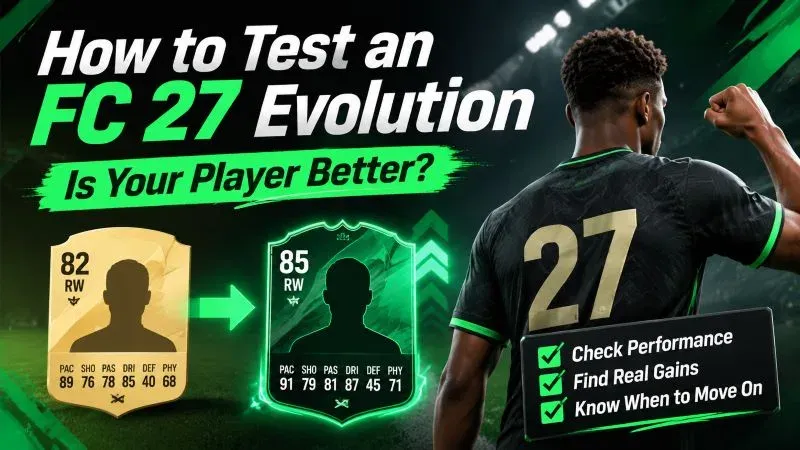
Stat boosts can be misleading. It’s easy to see +3 Pace or +4 Dribbling and assume the upgrade delivers real value. The real question is whether the fix targets the exact weakness that hurt the player before.
Take a winger who already has elite acceleration but struggles with poor composure inside the box. If the Evolution only pumps up his sprint speed, he might look faster on paper, but he still wastes clear-cut chances. That upgrade doesn’t solve the core problem.
A meaningful change shows up in the actions you rely on every game: cleaner first touches under pressure, more reliable defensive tracking, or consistently sharper finishing. If the upgraded stats don’t connect to his job, the upgrade is mostly cosmetic.
Three Types of Evolution Results
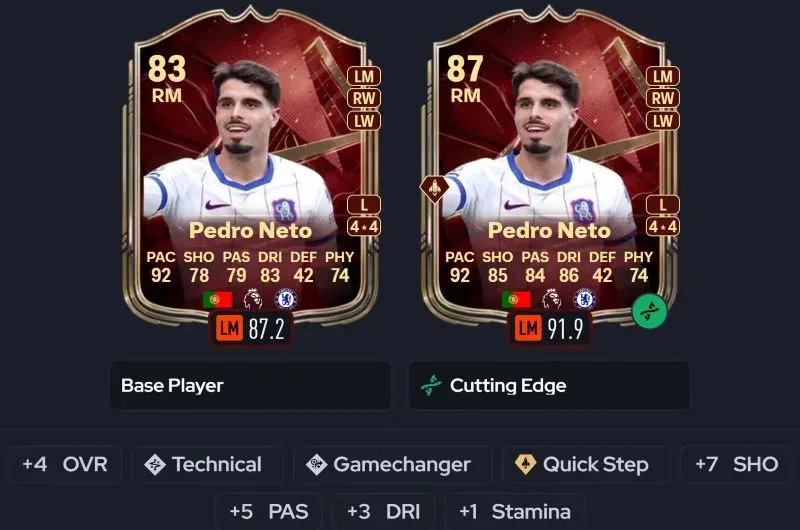
Every finished Evolution lands in one of three buckets. Use this table to classify your upgrade quickly:
| Result | What it means | Decision |
|---|---|---|
| Genuine Upgrade | Fixes a key weakness or unlocks a more useful role | Keep |
| Sidegrade | Improves certain attributes without meaningfully changing squad contribution | Depends on your tactics |
| Failed Upgrade | Leaves the player's main weakness unresolved | Consider replacing |
Sidegrades can be misleading. The card looks better, but its overall contribution to your squad hasn’t changed much. It may still be useful as a specialized substitute or for certain tactical matchups, so judge it by how often you actually need those improvements.
Did the Evolution Change His Role?
This is where the biggest gains can come from, separate from raw stat checks. A great Evolution can unlock new tactical uses for a player.
He might shift from a backup option into a dependable starter. A narrow inside forward could gain the stats and PlayStyles needed to run as a full-time playmaker. An attack-minded fullback might finally have the defensive tools to handle heavier defensive assignments.
The key question isn't simply whether he performs better in his original position. It's whether the upgrade opens up a role that wasn't realistic before. If he still serves the exact same purpose in your squad, the Evolution may have improved the card without meaningfully expanding its tactical value.
How to Test an Evolution In-Game Without Bias
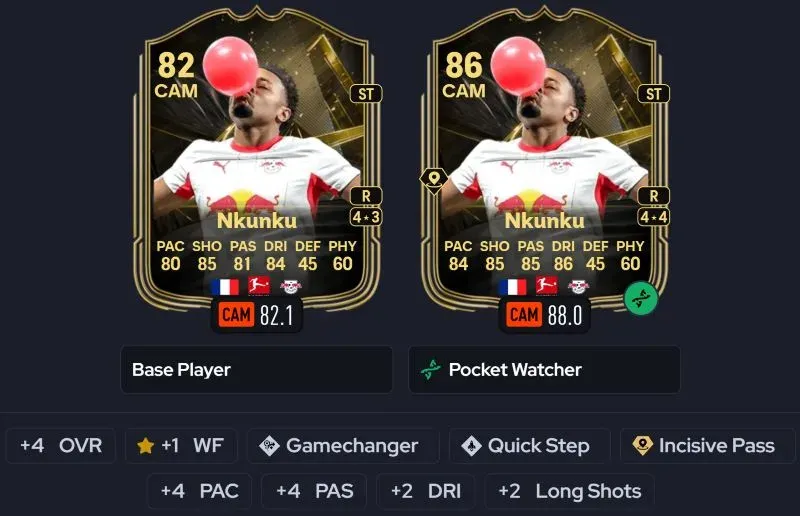
You can’t revert a completed Evolution to run a perfect side-by-side test. Instead, use your previous experience with the player as a reference point. Think about the situations where he struggled before the upgrade, then check whether those problems occur less often after the Evolution.
After upgrading, keep his position, tactical role, and chemistry style consistent where possible — adjust only if new position or attribute rules prevent the same setup.
Use the same game mode for your main evaluation whenever possible. Start with three or more matches as an initial sample, focusing on the actions your Evolution was meant to improve. Squad Battles can be used for extra practice, but don’t mix those results into your Rivals assessment — opponent behavior and match pacing are too different.
Watch the right things, not just goals and assists. A CDM’s value lives in interception timing and safe passing, not scoring. A striker’s test is positioning and finishing consistency, not a lucky one-off tap-in.
Look for repeated patterns rather than isolated moments. If your striker wins one extra duel or scores a great goal, that doesn’t automatically prove the Evolution worked. The improvement should show up consistently across similar situations.Three matches are a starting point, not a guarantee of a reliable verdict. If the player gets very few touches or faces completely different match situations, extend the test before making a decision.
Quick In-Game Evaluation Table
Pick only the rows that match what your Evolution was supposed to improve:
| Test Area | What to Check |
|---|---|
| Pace | Does he consistently create separation from defenders? |
| Dribbling | Are touches and turns sharper under pressure? |
| Shooting | Does he convert high-quality chances more reliably? |
| Defending | Does he win timely interceptions and defensive duels? |
| Passing | Does build-up and final-ball delivery feel more secure? |
| Physicality | Does he hold off challenges, win more physical duels, or maintain his performance late in matches? |
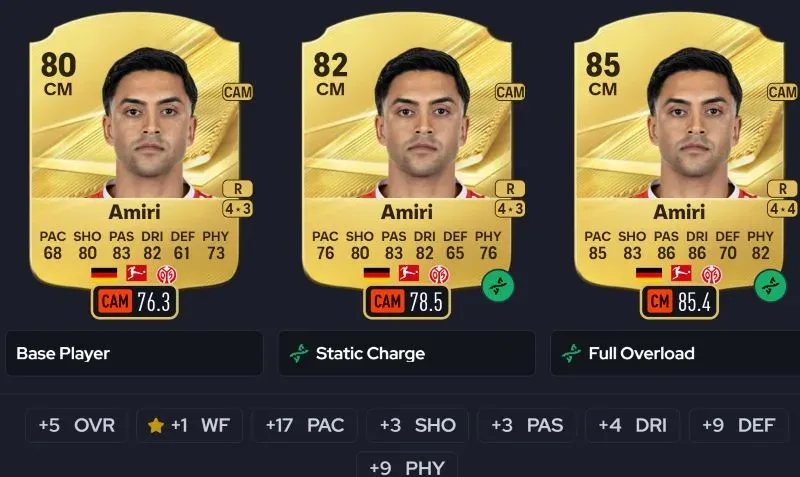
When to Replace an Evolved Player
Not every upgraded card deserves a permanent spot. It’s time to swap him out when the Evolution failed to close the gap you hoped it would.
Common signs: he still cannot compete for a meaningful role in your squad, his main weakness remains unresolved, your squad’s tactical needs have shifted, or another card fits that role better. If you’re weighing whether to keep the evolved player or buy a replacement, read our guide to FC 27 Evolutions vs the Transfer Market before making your decision. Holding onto him only because you finished the objectives is a classic sunk-cost trap.
Final Thoughts
FC 27 Evolutions are fun because they let you build custom cards, but a higher OVR doesn't guarantee a better addition to your squad. Focus on what the upgrade actually changes: the weaknesses it fixes, the roles it unlocks, and the consistency it brings to your gameplay.
If the player delivers meaningful improvements, keep him in your plans. If the upgrade only changes the numbers on the card, don't let the time you already invested stop you from moving on.